
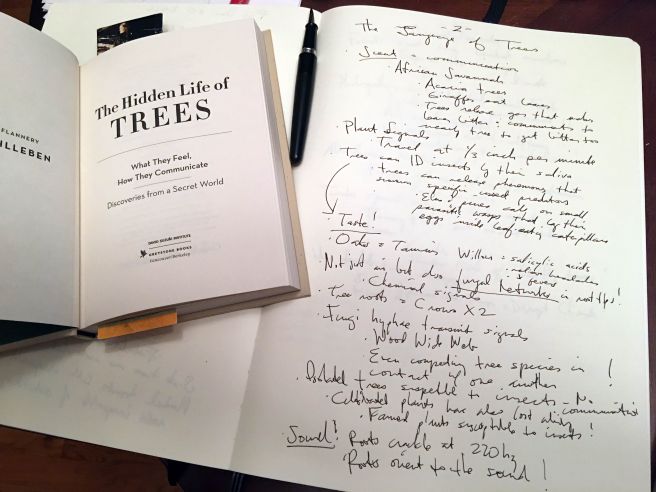
Chapter 2: The Language of Trees
scent = communication (6)
• the african savannah
• acacia trees
• giraffes eat leaves
• trees release gas that makes leaves bitter
• also signals nearby trees to make their own leaves bitter (7)
plant electrical signals travel at 1/3 of an inch per minute (8)
trees can identify insects by the insect’s saliva taste!(9)
• can release pheremones that summon specific insect predators (8)
• elms and pines call on small parasitic wasps that lay their eggs insided leaf-eating caterpillars (8)
oaks release tannins (9)
willows release salicylic acids (9)
• relieve headaches
• reduce fevers
trees also communicate by fungal networks in root tips (10)
tree root size is crown x2+ (10)
fungi hyphae transmit signals (10)
• ‘wood wide web’ (11)
• even competing tree species in contact with one another (11)
isolated trees susceptible to insects (11)
• no communication with other species (11)
cultivated plants have also lost ability to communicate (11)
• farmed plants especially susceptible to insects because they’re ‘deaf and dumb’ (11)
sound! (13)
• roots ‘crackle’ at 220 hz (13)
! root tips orient themselves towards the sound ! (13)
 backyardbiome.org
21 thoughts on “reading The Hidden Life of Trees – Chapter 2”