
Peter Wohlleben’s The Hidden Life of Trees
page numbers in parentheses. italics are my own questions of the text.
Foreword, Introductions, and Chapter 1 Notes
Chapter 7 Forest Etiquette
features of a mature well-formed deciduous (37)
• in youth
• narrow branches
• extend away from trunk
• die off
• sealed with new bark
• smooth column
• straight trunk
• regular arrangement of wood fibers
• long and smooth
• roots stretch out evenly in all directions
• reach down into earth under tree
• top
• symmetrical crown
• strong branches
• angling upward
same for conifers except
• topmost branches horizontal (or bent slightly downward)
STABILITY
• windstorm can tear at base of trunk with a force of 220 tons (38)
problematic tree shapes
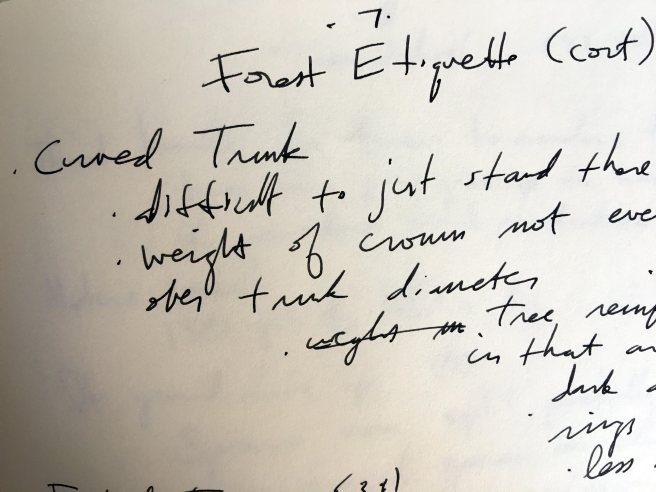
• curved trunk
• difficult to just stand there (38)
• weight of crown not evenly distributed over trunk diameter
• tree reinforces wood in that area
• dark areas in growth rings
• less air and more wood
• forked trees
• each have their own crown
• both swing back and forth in different directions (39)
• U shaped
• tree can make it
• V shaped
• fork breaks at narrowest point
• thick bulges of wood to try and prevent further damage
• bacteria blackened liquid constantly seeps from wood
• water gathers = rot
• banana shaped trunks
• lower part sticks out at an angle (40)
• due to snow or earth slide
trees grow only from the tip (40) what does that mean exactly? tip? tips
conifers grow straight or not at all (41)
• except pines
• crown points towards light
• highest breakage rate due to snow
 backyardbiome.org
17 thoughts on “reading The Hidden Life of Trees – Chapter 7”