
Peter Wohlleben’s The Hidden Life of Trees
Page numbers in parentheses. Italics are my own questions of the text.
Chapter 17 Notes Chapter 18 Notes Chapter 19 Notes
Chapter 14 Notes Chapter 15 Notes Chapter 16 Notes
Chapter 13 Notes Chapter 12 Notes Chapter 11 Notes
Chapter 10 Notes Chapter 9 Notes Chapter 8 Notes
Chapter 7 Notes Chapter 6 Notes Chapter 5 Notes
Chapters 3 & 4 Notes Chapter 2 Notes Foreword, Introductions, and Chapter 1 Notes
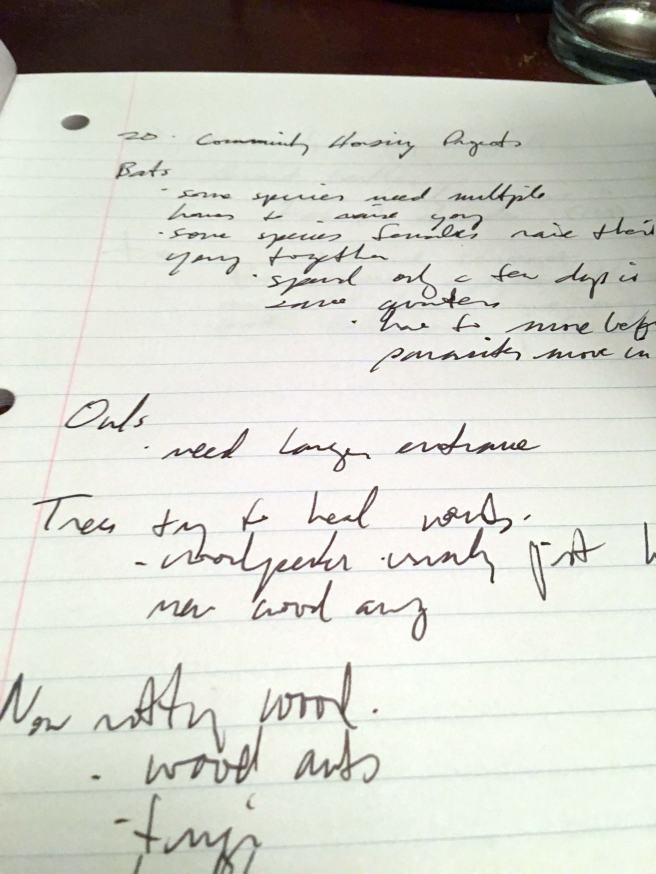
Chapter 20 – Community Housing Project
• birds, martins & bats (125)
• like thick trunks
• good insulation
• woodpeckers
• hack out 1 or two inch hole
• black woodpeckers
• work on multiple holes
• one for kids, one for sleeping
• take a month long break (126)
• fungi pitches in
• fungi keeps eating deeper
• woodpecker clears it out
• until hole too big for baby birds
• woodpecker moves out
• nuthatch (127)
• moves in
• closes up the too large entrance with mud
• wood conducts sound
• works as alarm for martins or squirrels
• if the bird has young can try to distract
• rarely works
• often have to try and raise a second brood
• bats
• some species need multiple homes to raise young (128)
• some species the females raise their young together
• spend only a few days in some quarters
• have to move before parasites move in
• owls
• need larger entrance
•trees try to heal wounds
• woodpeckers just hammer new wood away
•now rotting wood
• wood ants (129)
• fungi
• beetles
• animal excrement
• feeds bloodnecked click beetle
• hermit beetles
• can live in a tree for decades
• tree as community servant
• the more species diversity the less chance one will take over
 backyardbiome.org
This book looks very interesting! Thanks for posting. I just requested it from the library and I can’t wait to read it!
LikeLike