reading The Hidden Life of Trees – Chapter 24: A Question of Character

hidden-life-of-trees-chapter-24-notes

Peter Wohlleben’s The Hidden Life of Trees

Page numbers in parentheses. Italics are my own questions of the text.

Chapter 23 Notes

Chapter 20 Notes            Chapter 21 Notes         Chapter 22 Notes

Chapter 17 Notes             Chapter 18 Notes         Chapter 19 Notes

Chapter 14 Notes             Chapter 15 Notes         Chapter 16 Notes

Chapter 13 Notes             Chapter 12 Notes         Chapter 11 Notes

Chapter 10 Notes             Chapter 9 Notes           Chapter 8 Notes

Chapter 7 Notes               Chapter 6 Notes           Chapter 5 Notes

Chapters 3 & 4 Notes      Chapter 2 Notes      Foreword, Introductions, and Chapter 1 Notes

Chapter 24: A Question of Character

• three oaks next to each other in a field (151)

• soil conditions the same

• but one turns color before the others

• others wait to turn colors – why?

• they are all registering the same temp, amount of light, and number of warm days

• but each tree decides differently

• climate change

• temps remaining higher for longer

• when neighbor tree dies

• some trees grow out new branches low on trunk

• beneficial at first

• but as lower branches die, gives fungi a way in to tree

rather than question of character – is there a gene that inhibits branch growth that these trees lack?

reading The Hidden Life of Trees – Chapter 23: A Sense of Time

hidden-life-of-trees-chapter-23-notes

Peter Wohlleben’s The Hidden Life of Trees

Page numbers in parentheses. Italics are my own questions of the text.

Chapter 20 Notes            Chapter 21 Notes         Chapter 22 Notes

Chapter 17 Notes             Chapter 18 Notes         Chapter 19 Notes

Chapter 14 Notes             Chapter 15 Notes         Chapter 16 Notes

Chapter 13 Notes             Chapter 12 Notes         Chapter 11 Notes

Chapter 10 Notes             Chapter 9 Notes           Chapter 8 Notes

Chapter 7 Notes               Chapter 6 Notes           Chapter 5 Notes

Chapters 3 & 4 Notes      Chapter 2 Notes      Foreword, Introductions, and Chapter 1 Notes

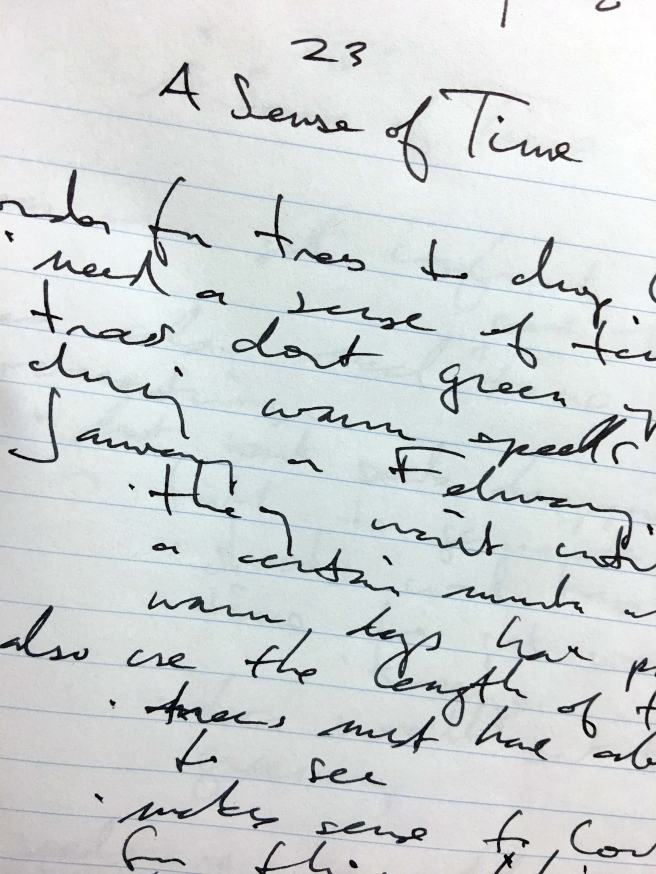
Chapter 23: A Sense of Time

• in order for trees to drop leaves and regrow (147)

• need a sense of time

• trees don’t green up during warm spells in january or february (148)

• they wait until a certain number of warm days have passed

• also use the length the day

• must have ability to ‘see’

• makes sense for this ability to be in the leaves but in april they don’t have leaves

• is the ability in the buds?

• even agricultural weeds can germinate by the light of the moon

• combination of the length of day and temperature

• trees transplanted from northern to southern hemispheres can adapt

• trees can also get confused

• trees need a sense of time for procreation

• don’t want seeds dropping in fall to germinate

• shoots won’t have time to get woody

• can freeze

• herbivores eat fresh greenery

• seeds register cold

• shoot up after extended warm period

• works great if they get buried by bird or squirrel

• it doesn’t get warm in the soil until well into spring

• light seeds that land on surfaces must register day length

reading The Hidden Life of Trees- Chapter 22: Hibernation

hidden-life-of-trees-chapter-22-notes

Peter Wohlleben’s The Hidden Life of Trees

Page numbers in parentheses. Italics are my own questions of the text.

Chapter 20 Notes            Chapter 21 Notes

Chapter 17 Notes             Chapter 18 Notes          Chapter 19 Notes

Chapter 14 Notes             Chapter 15 Notes         Chapter 16 Notes

Chapter 13 Notes             Chapter 12 Notes         Chapter 11 Notes

Chapter 10 Notes             Chapter 9 Notes           Chapter 8 Notes

Chapter 7 Notes               Chapter 6 Notes           Chapter 5 Notes

Chapters 3 & 4 Notes      Chapter 2 Notes      Foreword, Introductions, and Chapter 1 Notes

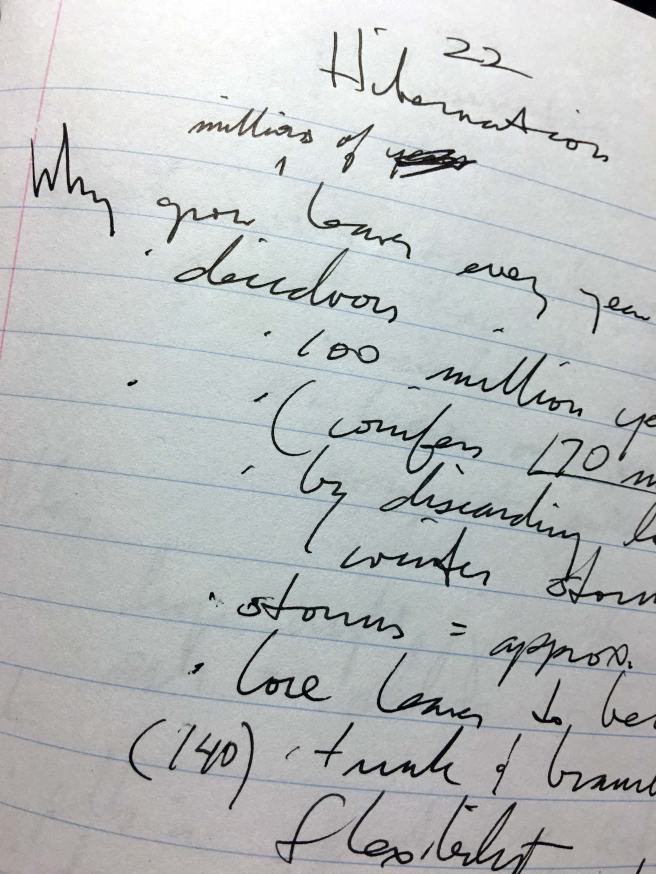
Chapter 22: Hibernation

summer (136)

•stressful season for trees

• make sugars all season

• trees do get full (137)

• wild cherries, bird cherries

• begin to turn red

• storage space under bark gets full

• most trees don’t shut down until after first frost

• wood that’s too wet when frozen can burst

• so trees start cutting back in july

• fetch energy reserves from branches

leaves

• yellow & brown (138)

• carotene

• may act as alarm

• more colorful means more potential toxins to intruders?

conifers

• protect needles with antifreeze

• wax coats the leaves

• holds in water

why grow millions of leaves every year just to discard? (139)

• deciduous

• 100 million years old

• conifers are 170 million years old

• by discarding leaves they avoid damage from winter storms

• losing leaves makes the trees aerodynamic

• trunks and branches shaped for flexibility (140)

• winds absorbed and distributed throughout tree

• snow and ice weigh down leaves (141)

• trees also excrete waste through release of leaves

• grow a layer of cells that close the connection between leaves and branches

• trees need rest

• oaks can’t grow in your living room because they can’t get any rest

young trees

• keep their leaves a little longer

• take advantage of the light

• leaf out about two weeks before older trees (143)

• spring begins 2 weeks earlier near the ground than in the canopy

• cold winds

• leaves on floor create warmth as they decompose

alders

• drop bright green leaves

• fungi and bacteria break the leaves down into substances alder can use to make chlorophyll

• ash and elders similiar (144)

oak

• pull in carotene and anthocyanins

• very careful, so they drop brown, depleted leaves

conifers

• 3 species do drop their leaves

• larch, bald cypress, and dawn redwood

• spruce, pine, fir, and douglas firs

• change out their needles

• shed oldest needles

• firs keep ten years of healthy needles

• spruce keep 6 years worth

• pines keep 3 years worth

• can look sparse in winter