reading The Hidden Life of Trees – Chapter 17 – Woody Climate Control

hidden-life-of-trees-chapter-17-notes

Peter Wohlleben’s The Hidden Life of Trees

Page numbers in parentheses. Italics are my own questions of the text.

Chapter 14 Notes             Chapter 15 Notes         Chapter 16 Notes

Chapter 13 Notes             Chapter 12 Notes         Chapter 11 Notes

Chapter 10 Notes             Chapter 9 Notes           Chapter 8 Notes

Chapter 7 Notes               Chapter 6 Notes           Chapter 5 Notes

Chapters 3 & 4 Notes      Chapter 2 Notes      Foreword, Introductions, and Chapter 1 Notes

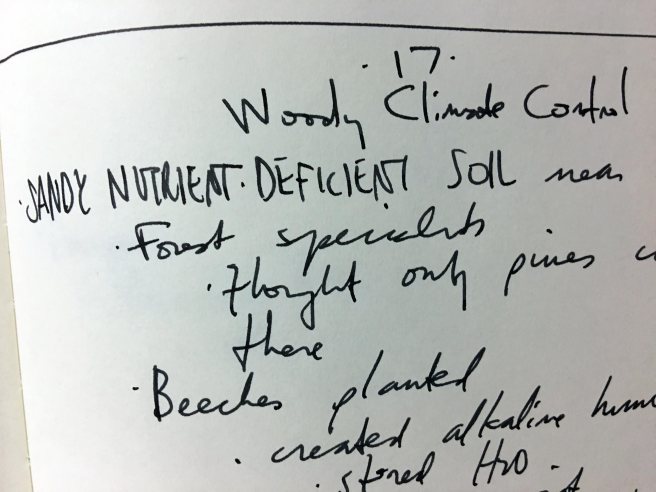
Chapter 17 – Woody Climate Control

Bamburg Germany (99)

• sandy, nutrient deficient soil

• forest specialists  thought only pines could flourish there

• beeches planted

• created alkaline humus

• stored water

• air becomes moist

• trees slow the wind

• grows above the pines

• FOREST CREATED ITS OWN IDEAL HABITAT! (100)

temperature differences between thinned conifers and naturally aged beech

• deciduous 50º < than coniferous

• due to biomass and shade

• more living and dead wood in the forest

• thicker layer of humus

• more water stored in total forest mass

• evaporation leads to cooling which in turn leads to evaporation

• intact forests sweat to cool (101)

• can see this in trees planted too close to houses

• tree sweats so profusely that algae and moss colonize the house

downpours

• deciduous trees open leaves of crown

• water runs down trunk

• foams up

• stored in soil
reading The Hidden Life of Trees – Chapter 12

hidden-life-of-trees-chapter-12-notes

Peter Wohlleben’s The Hidden Life of Trees

Page numbers in parentheses. Italics are my own questions of the text.

Chapter 11 Notes

Chapter 10 Notes             Chapter 9 Notes      Chapter 8 Notes

Chapter 7 Notes               Chapter 6 Notes      Chapter 5 Notes

Chapters 3 & 4 Notes      Chapter 2 Notes      Foreword, Introductions, and Chapter 1 Notes

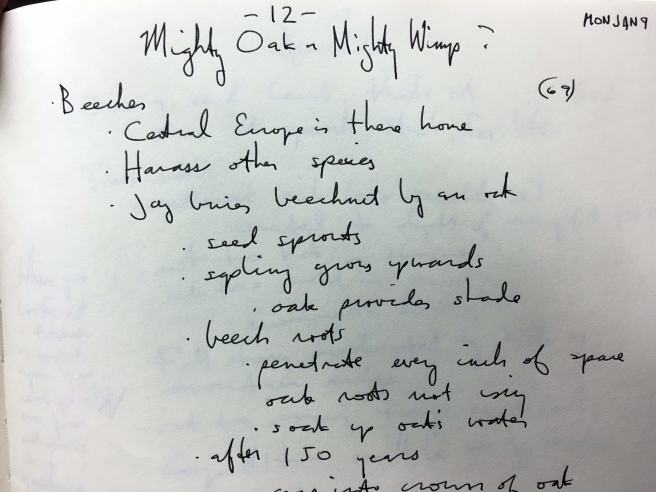
Chapter 12 Mighty Oak or Mighty Wimp?

beeches

• central europe is their home (69)

• harass other species

• how?

• jay buries beechnut by an oak

• seed sprouts

• sapling grows upwards

• oak provides shade

• beech roots

• penetrate every inch of space oak roots not using

• soak up oak’s water

• after 150 years

• grows into crown of oak

• extends crown

• catches 97% of light

• oak starves

• desperately tries to grow leaves at base of trunk

• oak

• tough with no competition (70)

• oaks can last 500 years outside the forest

• beeches need the forest – can only last 200 years

• wounds or cracks in trunk:

• protected with tannins (71)

• discourage fungi growth

• branches broken

• can grow replacement crown

• thick bark

• beeches are thin-skinned (72)

reading The Hidden Life of Trees Chapter 11

hidden-life-of-trees-chapter-11-notes

Peter Wohlleben’s The Hidden Life of Trees

Page numbers in parentheses. Italics are my own questions of the text.

Chapter 10 Notes             Chapter 9 Notes      Chapter 8 Notes

Chapter 7 Notes               Chapter 6 Notes      Chapter 5 Notes

Chapters 3 & 4 Notes      Chapter 2 Notes      Foreword, Introductions, and Chapter 1 Notes

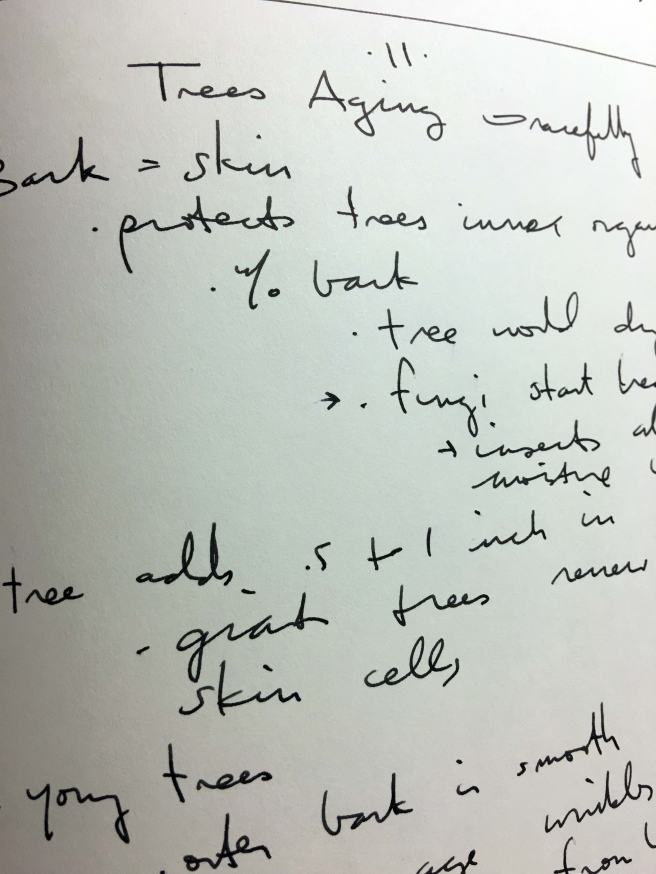
Chapter 11 Trees Aging Gracefully

bark = skin

• protects trees inner organs (61)

• without bark

• tree dries out

• fungi start breaking everything down

• insects also invade with lower moisture levels

tree adds .5 to 1 inch in girth

• trees renew skin and shed skin cells

young trees = smooth outer bark (62)

• as trees age wrinkles appear

• starting from bottom

• deepen over time

beeches

• high renewal rate

• skin thin

• matches girth

• doesn’t crack

pines

• shed slowly

• thick oak bark

• exterior layers decades old (63)

• outer layers originated when tree was young

beeches

• once they start to wrinkle

• mosses colonize nooks and crannies

• estimate tree age by height of green moss

• higher the moss, older the tree

canadian west coast (64)

• ancient growth

• sitka spruce

• 500 years old

• moss in branches and forks

• algae

• capture nitrogen

• rain washes nitrogen down trunk

• nitrogen is a fertilizer

• fertilizes young trees

old age

• after 100 – 300 years (65)

• crown growth gets shorter

• every tree gradually stops getting taller

• energy levels drop

• loses twigs top-down

• fungi advance inward (66)

• consume cellulose and lignin

• trees grows outward to counter

• trunk snaps

reading The Hidden Life of Trees – Chapter 5

hidden-life-of-trees-chapter-5-notes

Peter Wohlleben’s The Hidden Life of Trees.

Chapter 3 & 4 Notes

Chapter 2 Notes

Foreword, Introductions, and Chapter 1 Notes

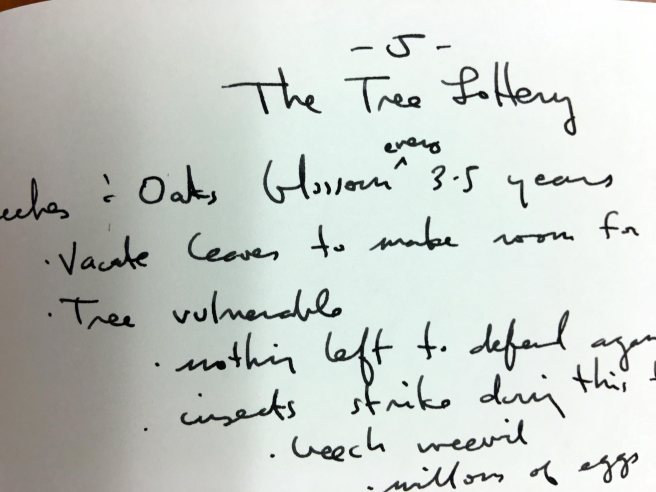
Chapter 5 The Tree Lottery

beeches and oaks blossom every 3 – 5 years

• vacate leaves to make room for blossoms (26)

• trees left vulnerable

• nothing left to defend against sickness or insects

• have to endure insect attack without responding (27)

• sick trees don’t produce fewer blossoms

• protect their genetic legacy

• blossom production has more to do with the previous year than the upcoming year (27)

seeds

• beeches and oaks

• seeds fall directly under mother trees

• sprout as quickly as possible (28)

• bird cherries

• pioneer species

• seeds can lie dormant for up to 5 years

only one tree will reach adulthood! (29)

• beeches = 30k beechnuts

• sexually mature @ 80 – 150 years

• live about 400 years

• 60 fruitings over that span

= 1.8 million beechnuts

• poplars

• 54 million seeds every year

• more than a billion seeds in a lifetime (30)