reading The Hidden Life of Trees – Chapter 18 – The Forest as a Water Pump

hidden-life-of-trees-chapter-18-notesPeter Wohlleben’s The Hidden Life of Trees

Page numbers in parentheses. Italics are my own questions of the text.

Chapter 17 Notes

Chapter 14 Notes             Chapter 15 Notes         Chapter 16 Notes

Chapter 13 Notes             Chapter 12 Notes         Chapter 11 Notes

Chapter 10 Notes             Chapter 9 Notes           Chapter 8 Notes

Chapter 7 Notes               Chapter 6 Notes           Chapter 5 Notes

Chapters 3 & 4 Notes      Chapter 2 Notes      Foreword, Introductions, and Chapter 1 Notes

Chapter 18 – The Forest as a Water Pump

land higher than water (105)

•should dry out but

• clouds form over oceans

• blow in from wind

• if this was the only system it would be dry 400 miles inland

thank goodness for trees and forests (106)

• rainfall intercepted in canopy

• evaporates immediately

• use up to 8500 cubic yds of water per mile

• water vapor creates more clouds

• clouds can travel farther inland

FOR WATER TO MAKE IT INLAND WE MUST HAVE FOREST

• coastal forests are the foundation of this system

• whole process breaks down if coastal forests cleared

• AMAZON FOREST DRYING OUT (107)

conifers

• release terpenes

• defense against illness and pests

• moisture condenses on molecules

• creates clouds twice as thick as over non forested areas

regular rainfall vital

• streams, ponds, and forests require STABILITY

trees slow rainfall (108)

• water drips gently from branches and leaves

• loosely packed soil absorbs water

• water droplets don’t join to form streams that rush away soil

• moisture takes decades to be released

streams

• more susceptible to temperature variations than springs (109)

• winter

• trees help prevent freezing

• bare branches allow warmth through

• also prevented by water moving over uneven bottom

• spring and summer

• new leaves shade stream from heat

• fall

• cool air and leaves fall and allow warmth in

• coniferous tree streams

• more susceptible to freezing (109)

• dead trees falling across streambeds (110)

• provide calm water

• slows water to give bacteria more time to break down leaves and debris

• foam

• humic acids

• beneficial how?

beaver

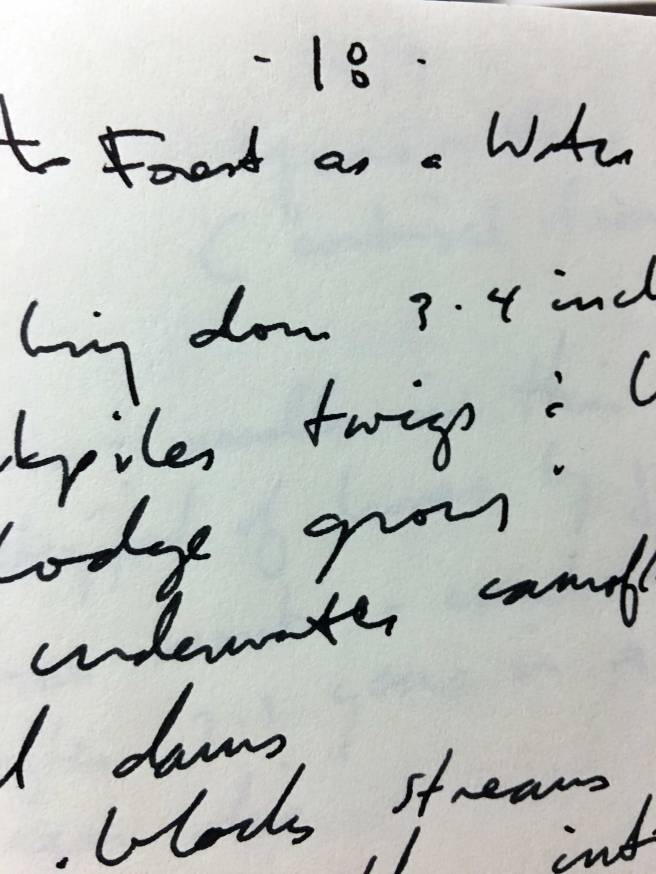
• can bring down 3 – 4 inch trees in one night (111)

• stockpile twigs and branches

• lodge gets larger

• underwater camouflaged entrances

• build dams

• blocks streams

• turns them into large ponds

• alders and willows grow

• beeches die

• regulates water supplies

deciduous trees

• chaffinch

• rustred bird with gray head

• chip chip chip chooee chooee if sunny

• if rain on way: run run run run run
reading The Hidden Life of Trees – Chapter 17 – Woody Climate Control

hidden-life-of-trees-chapter-17-notes

Peter Wohlleben’s The Hidden Life of Trees

Page numbers in parentheses. Italics are my own questions of the text.

Chapter 14 Notes             Chapter 15 Notes         Chapter 16 Notes

Chapter 13 Notes             Chapter 12 Notes         Chapter 11 Notes

Chapter 10 Notes             Chapter 9 Notes           Chapter 8 Notes

Chapter 7 Notes               Chapter 6 Notes           Chapter 5 Notes

Chapters 3 & 4 Notes      Chapter 2 Notes      Foreword, Introductions, and Chapter 1 Notes

Chapter 17 – Woody Climate Control

Bamburg Germany (99)

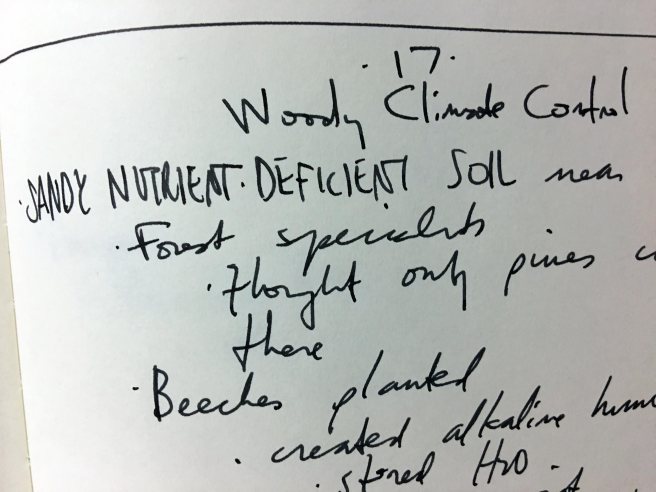
• sandy, nutrient deficient soil

• forest specialists  thought only pines could flourish there

• beeches planted

• created alkaline humus

• stored water

• air becomes moist

• trees slow the wind

• grows above the pines

• FOREST CREATED ITS OWN IDEAL HABITAT! (100)

temperature differences between thinned conifers and naturally aged beech

• deciduous 50º < than coniferous

• due to biomass and shade

• more living and dead wood in the forest

• thicker layer of humus

• more water stored in total forest mass

• evaporation leads to cooling which in turn leads to evaporation

• intact forests sweat to cool (101)

• can see this in trees planted too close to houses

• tree sweats so profusely that algae and moss colonize the house

downpours

• deciduous trees open leaves of crown

• water runs down trunk

• foams up

• stored in soil

reading The Hidden Life of Trees – Chapter 16 – Carbon Dioxide Vacuums

hidden-life-of-trees-chapter-16-notes

Peter Wohlleben’s The Hidden Life of Trees

Page numbers in parentheses. Italics are my own questions of the text.

Chapter 14 Notes             Chapter 15 Notes

Chapter 13 Notes             Chapter 12 Notes         Chapter 11 Notes

Chapter 10 Notes             Chapter 9 Notes           Chapter 8 Notes

Chapter 7 Notes               Chapter 6 Notes           Chapter 5 Notes

Chapters 3 & 4 Notes      Chapter 2 Notes      Foreword, Introductions, and Chapter 1 Notes

Chapter 16 – Carbon Dioxide Vacuums

forest systems are complicated (93)

• co2 = humus (94)

• becomes more concentrated over time

• far distant future:

• can become coal

• bituminous

• anthracite

today’s fossil fuels (94)

• trees that died 300 million years ago

• trees looked different then

• 100 ft tall horsetail or fern

• trunk diameters of 6 ft

• most trees grew in swamps

• died of old age

• splashed down in stagnant water

• hardly rotted at all

• over thousands of years became layers of peat

• rocky layer

• pressure turned peat into coal

today no coal is formed

• forests are constantly cleared

• sun reaches down

• kicks trees into high gear (95)

• consumes humus deep down into soil

• carbon stores in our latitudes being consumed as fast as its being formed

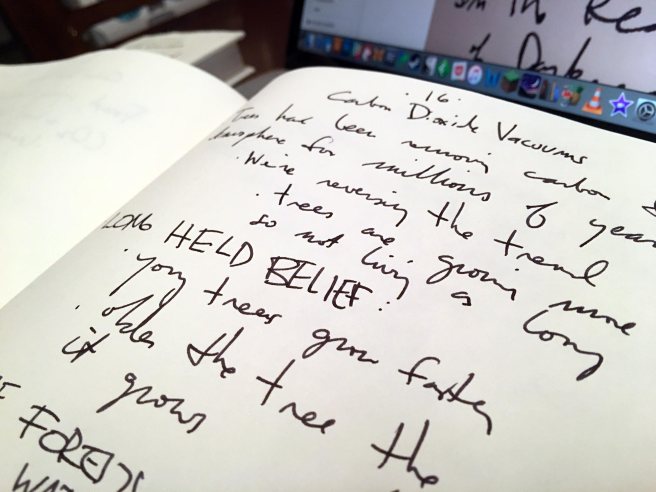
trees have been removing carbon from atmosphere for millions of years (96)

• we’re reversing the trend

• trees are growing more quickly so not living as long

shatters long-held belief that young trees grow faster

• older the tree the more quickly it grows (97) !

IN ORDER TO USE FORESTS IN FIGHT AGAINST GLOBAL WARMING

• we must allow them to grow old (98)