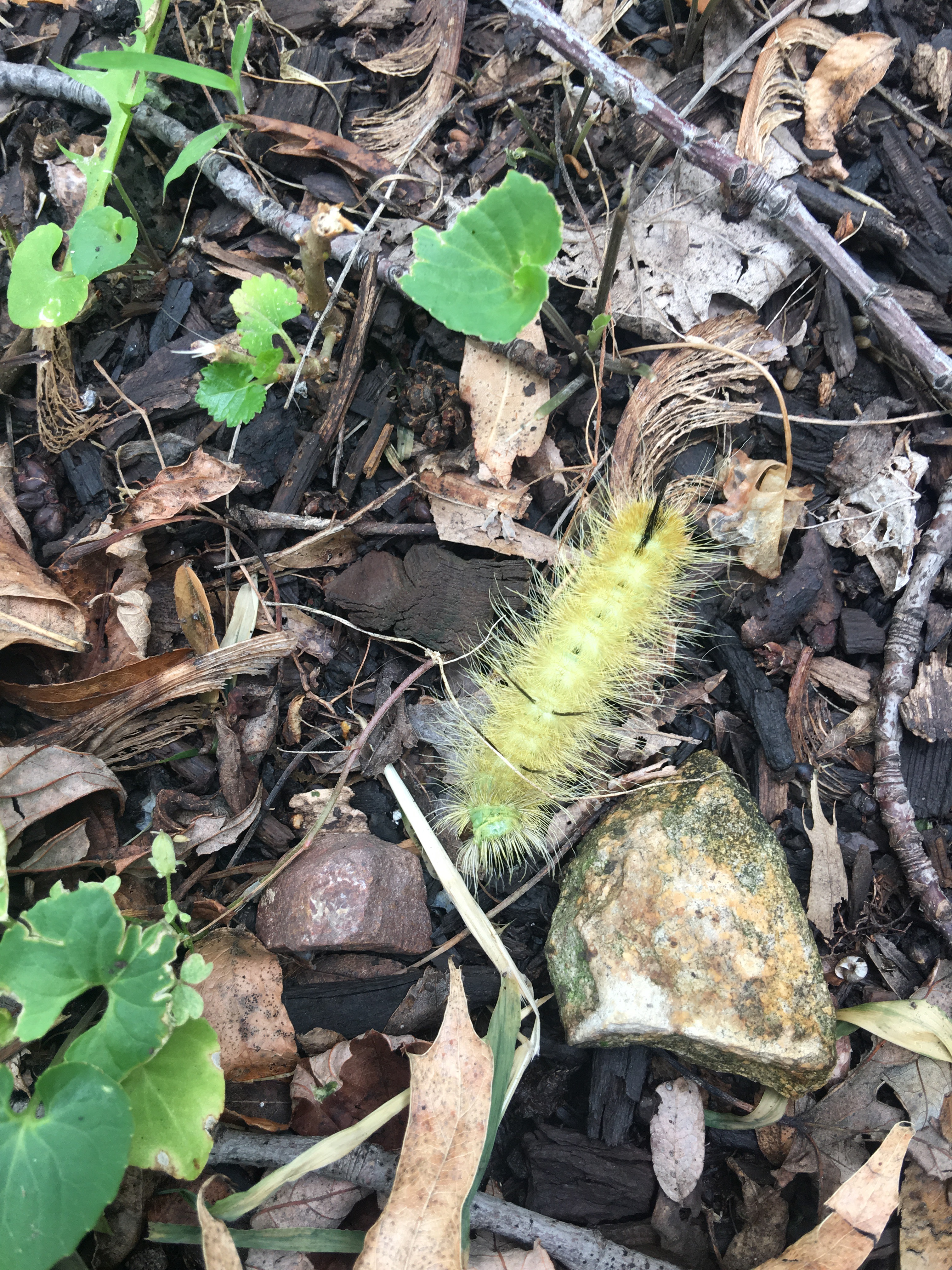
Identification is always difficult for me.
Maybe halysidota tessellaris larva.
Strange to think this creature will (if it doesn’t get eaten I guess) transform so completely.

Identification is always difficult for me.
Maybe halysidota tessellaris larva.
Strange to think this creature will (if it doesn’t get eaten I guess) transform so completely.
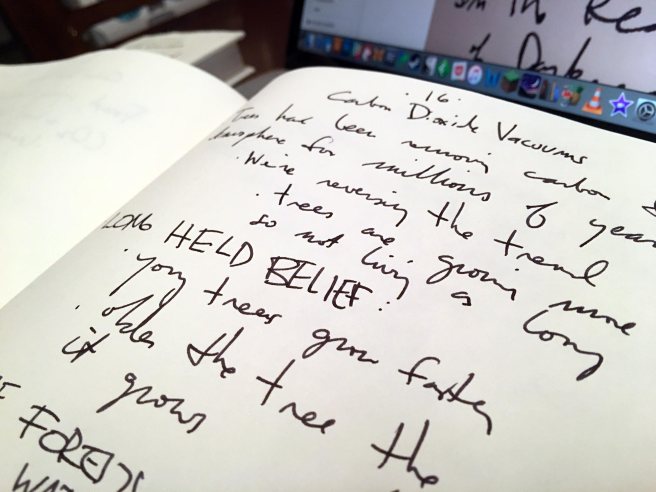
Peter Wohlleben’s The Hidden Life of Trees
Page numbers in parentheses. Italics are my own questions of the text.
Chapter 14 Notes Chapter 15 Notes
Chapter 13 Notes Chapter 12 Notes Chapter 11 Notes
Chapter 10 Notes Chapter 9 Notes Chapter 8 Notes
Chapter 7 Notes Chapter 6 Notes Chapter 5 Notes
Chapters 3 & 4 Notes Chapter 2 Notes Foreword, Introductions, and Chapter 1 Notes
forest systems are complicated (93)
• co2 = humus (94)
• becomes more concentrated over time
• far distant future:
• can become coal
• bituminous
• anthracite
today’s fossil fuels (94)
• trees that died 300 million years ago
• trees looked different then
• 100 ft tall horsetail or fern
• trunk diameters of 6 ft
• most trees grew in swamps
• died of old age
• splashed down in stagnant water
• hardly rotted at all
• over thousands of years became layers of peat
• rocky layer
• pressure turned peat into coal
today no coal is formed
• forests are constantly cleared
• sun reaches down
• kicks trees into high gear (95)
• consumes humus deep down into soil
• carbon stores in our latitudes being consumed as fast as its being formed
trees have been removing carbon from atmosphere for millions of years (96)
• we’re reversing the trend
• trees are growing more quickly so not living as long
shatters long-held belief that young trees grow faster
• older the tree the more quickly it grows (97) !
IN ORDER TO USE FORESTS IN FIGHT AGAINST GLOBAL WARMING
• we must allow them to grow old (98)
With the computers we carry around in our pockets, it’s never been easier to take a photo of an unidentified plant or animal. And with that same pocket computer, it’s never been easier to try and identify it.
We can all be amateur naturalists, right in our own backyards.
To track my lack of knowledge about my own backyard, I created backyardbiome.org, where all of my questions and all of the resources I use to try and answer those questions could coexist in one place.
My first post features this little creature. My grandmother would call it a “housenka,” Czech for caterpillar. It seems that I used to see more as a kid, I loved watching them move, and they always seemed so vulnerable crossing an expanse of sidewalk. The housenkas from my childhood had wide bands of dark brown and orange fuzz (fur?), and not the bright yellow exhibited by this particular caterpillar. I spotted it in the grass while mowing the backyard and had to document it so I could learn more about it.
I found http://www.discoverlife.org/mp/20q?search=Lepidoptera and I think I’ve identified it as the larva of hallysidota tessellaris, a moth.
Turns out identifying caterpillars is fairly difficult and I could absolutely be wrong. If I am mistaken, please let me know in the comments.
 backyardbiome.org