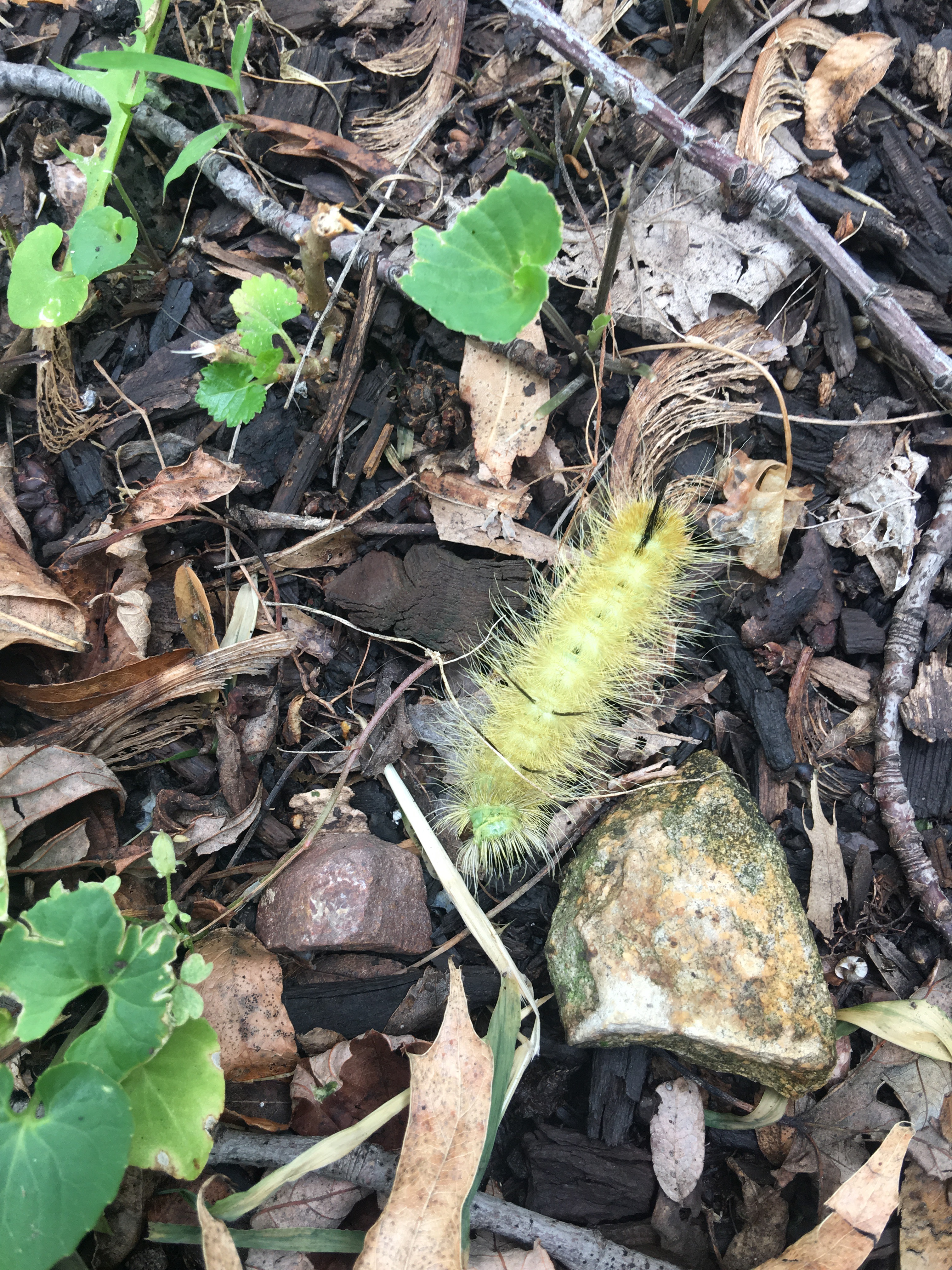
Identification is always difficult for me.
Maybe halysidota tessellaris larva.
Strange to think this creature will (if it doesn’t get eaten I guess) transform so completely.

Identification is always difficult for me.
Maybe halysidota tessellaris larva.
Strange to think this creature will (if it doesn’t get eaten I guess) transform so completely.

Peter Wohlleben’s The Hidden Life of Trees
Page numbers in parentheses. Italics are my own questions of the text.
Chapter 20 Notes Chapter 21 Notes Chapter 22 Notes
Chapter 17 Notes Chapter 18 Notes Chapter 19 Notes
Chapter 14 Notes Chapter 15 Notes Chapter 16 Notes
Chapter 13 Notes Chapter 12 Notes Chapter 11 Notes
Chapter 10 Notes Chapter 9 Notes Chapter 8 Notes
Chapter 7 Notes Chapter 6 Notes Chapter 5 Notes
Chapters 3 & 4 Notes Chapter 2 Notes Foreword, Introductions, and Chapter 1 Notes
• three oaks next to each other in a field (151)
• soil conditions the same
• but one turns color before the others
• others wait to turn colors – why?
• they are all registering the same temp, amount of light, and number of warm days
• but each tree decides differently
• climate change
• temps remaining higher for longer
• when neighbor tree dies
• some trees grow out new branches low on trunk
• beneficial at first
• but as lower branches die, gives fungi a way in to tree
rather than question of character – is there a gene that inhibits branch growth that these trees lack?
Peter Wohlleben’s The Hidden Life of Trees
Page numbers in parentheses. Italics are my own questions of the text.
Chapter 20 Notes Chapter 21 Notes Chapter 22 Notes
Chapter 17 Notes Chapter 18 Notes Chapter 19 Notes
Chapter 14 Notes Chapter 15 Notes Chapter 16 Notes
Chapter 13 Notes Chapter 12 Notes Chapter 11 Notes
Chapter 10 Notes Chapter 9 Notes Chapter 8 Notes
Chapter 7 Notes Chapter 6 Notes Chapter 5 Notes
Chapters 3 & 4 Notes Chapter 2 Notes Foreword, Introductions, and Chapter 1 Notes
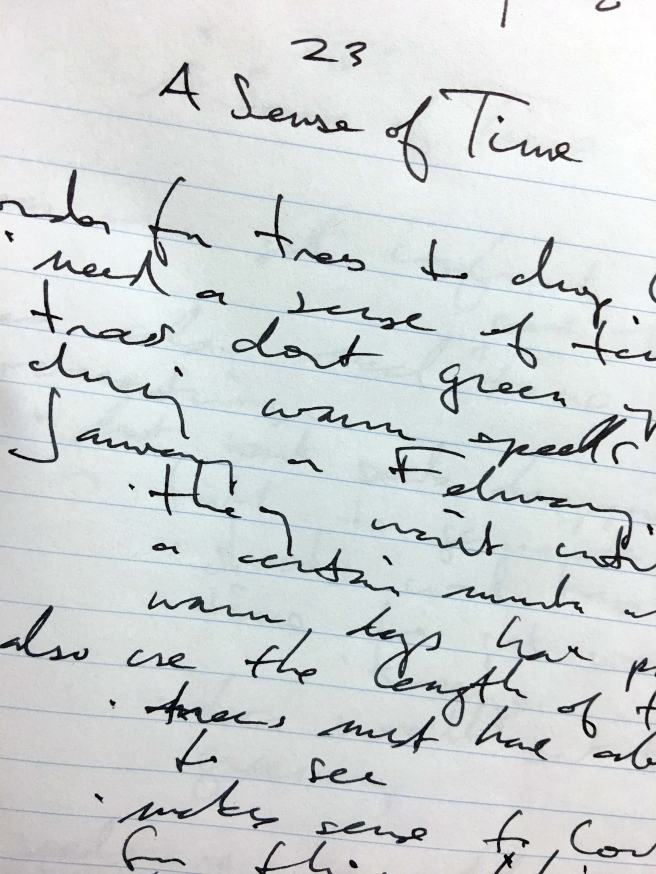
• in order for trees to drop leaves and regrow (147)
• need a sense of time
• trees don’t green up during warm spells in january or february (148)
• they wait until a certain number of warm days have passed
• also use the length the day
• must have ability to ‘see’
• makes sense for this ability to be in the leaves but in april they don’t have leaves
• is the ability in the buds?
• even agricultural weeds can germinate by the light of the moon
• combination of the length of day and temperature
• trees transplanted from northern to southern hemispheres can adapt
• trees can also get confused
• trees need a sense of time for procreation
• don’t want seeds dropping in fall to germinate
• shoots won’t have time to get woody
• can freeze
• herbivores eat fresh greenery
• seeds register cold
• shoot up after extended warm period
• works great if they get buried by bird or squirrel
• it doesn’t get warm in the soil until well into spring
• light seeds that land on surfaces must register day length
Peter Wohlleben’s The Hidden Life of Trees
Page numbers in parentheses. Italics are my own questions of the text.
Chapter 20 Notes Chapter 21 Notes
Chapter 17 Notes Chapter 18 Notes Chapter 19 Notes
Chapter 14 Notes Chapter 15 Notes Chapter 16 Notes
Chapter 13 Notes Chapter 12 Notes Chapter 11 Notes
Chapter 10 Notes Chapter 9 Notes Chapter 8 Notes
Chapter 7 Notes Chapter 6 Notes Chapter 5 Notes
Chapters 3 & 4 Notes Chapter 2 Notes Foreword, Introductions, and Chapter 1 Notes
summer (136)
•stressful season for trees
• make sugars all season
• trees do get full (137)
• wild cherries, bird cherries
• begin to turn red
• storage space under bark gets full
• most trees don’t shut down until after first frost
• wood that’s too wet when frozen can burst
• so trees start cutting back in july
• fetch energy reserves from branches
leaves
• yellow & brown (138)
• carotene
• may act as alarm
• more colorful means more potential toxins to intruders?
conifers
• protect needles with antifreeze
• wax coats the leaves
• holds in water
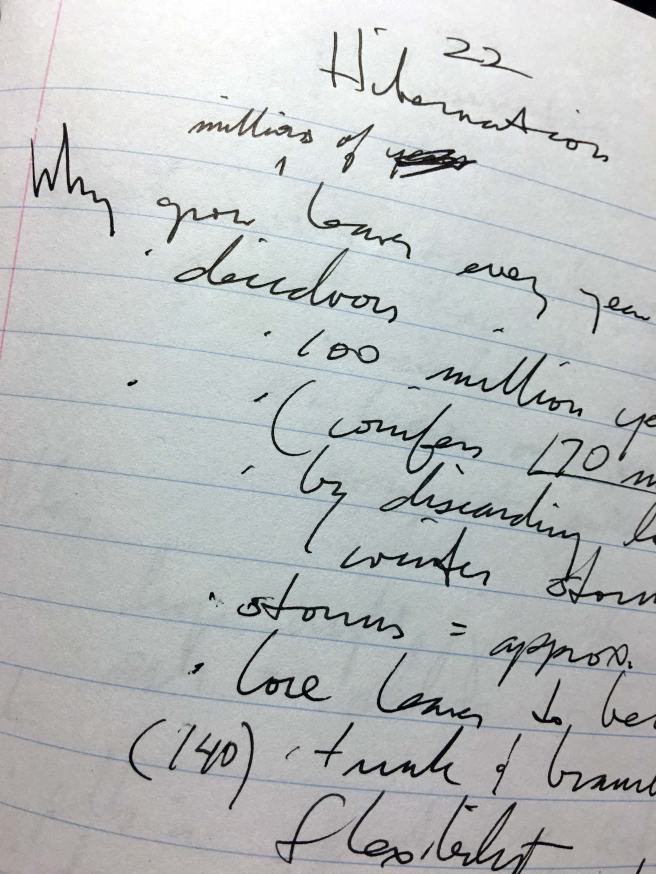
why grow millions of leaves every year just to discard? (139)
• deciduous
• 100 million years old
• conifers are 170 million years old
• by discarding leaves they avoid damage from winter storms
• losing leaves makes the trees aerodynamic
• trunks and branches shaped for flexibility (140)
• winds absorbed and distributed throughout tree
• snow and ice weigh down leaves (141)
• trees also excrete waste through release of leaves
• grow a layer of cells that close the connection between leaves and branches
• trees need rest
• oaks can’t grow in your living room because they can’t get any rest
young trees
• keep their leaves a little longer
• take advantage of the light
• leaf out about two weeks before older trees (143)
• spring begins 2 weeks earlier near the ground than in the canopy
• cold winds
• leaves on floor create warmth as they decompose
alders
• drop bright green leaves
• fungi and bacteria break the leaves down into substances alder can use to make chlorophyll
• ash and elders similiar (144)
oak
• pull in carotene and anthocyanins
• very careful, so they drop brown, depleted leaves
conifers
• 3 species do drop their leaves
• larch, bald cypress, and dawn redwood
• spruce, pine, fir, and douglas firs
• change out their needles
• shed oldest needles
• firs keep ten years of healthy needles
• spruce keep 6 years worth
• pines keep 3 years worth
• can look sparse in winter
Peter Wohlleben’s The Hidden Life of Trees
Page numbers in parentheses. Italics are my own questions of the text.
Chapter 17 Notes Chapter 18 Notes Chapter 19 Notes
Chapter 14 Notes Chapter 15 Notes Chapter 16 Notes
Chapter 13 Notes Chapter 12 Notes Chapter 11 Notes
Chapter 10 Notes Chapter 9 Notes Chapter 8 Notes
Chapter 7 Notes Chapter 6 Notes Chapter 5 Notes
Chapters 3 & 4 Notes Chapter 2 Notes Foreword, Introductions, and Chapter 1 Notes
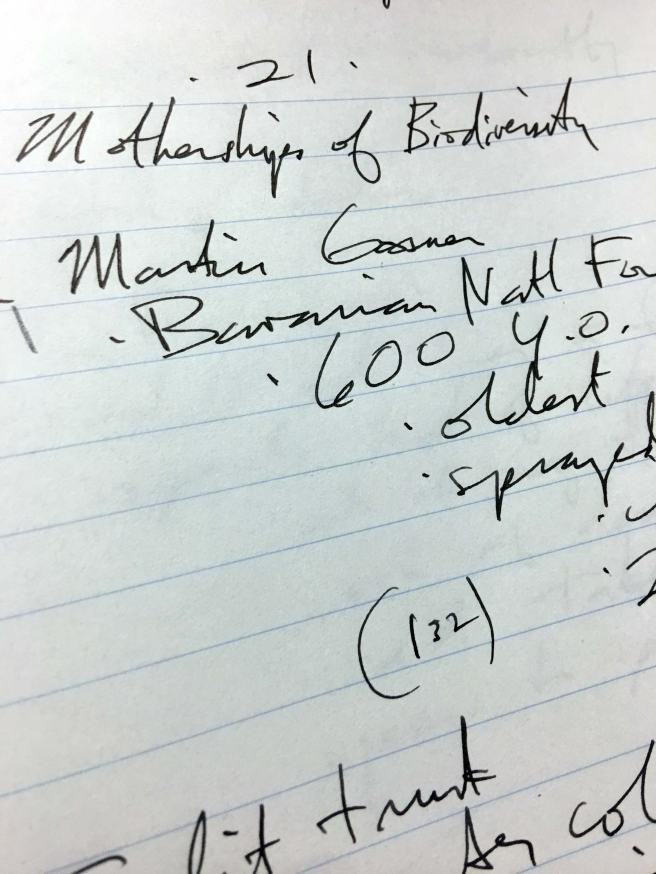
dr martin gossner (131)
• bavarian national forest
• 600 year old tree
• oldest in the forest
• sprayed with insecticide pyrethum
• 2,041 animals (132)
• 257 different species
split trunk of tree
• rainwater collects at point of division
• home to tiny flies that are food for beetles
trunk cavities with water
• even though its dark with low oxygen species live there too
• bumblebee hover fly larvae
• have snorkels
• bacteria as food source
dead trunk (133)
• resource for children trees
• little trees don’t have direct access to the dead trunk
• need help from other organisms
• fungi and insects
stag beetles (133)
• adult only lives a few weeks
• can stay in larvae stage for 8 years
• eats its way through dead roots of deciduous trees
6,000 species depend on dead wood
• removing dead wood destroys habitat
• live wood is of no use to species that live in dead wood
spruce
• sprout particularly well in cradle of dead parent tree
• nurse log reproduction or cadaver rejuvenation
Peter Wohlleben’s The Hidden Life of Trees
Page numbers in parentheses. Italics are my own questions of the text.
Chapter 17 Notes Chapter 18 Notes Chapter 19 Notes
Chapter 14 Notes Chapter 15 Notes Chapter 16 Notes
Chapter 13 Notes Chapter 12 Notes Chapter 11 Notes
Chapter 10 Notes Chapter 9 Notes Chapter 8 Notes
Chapter 7 Notes Chapter 6 Notes Chapter 5 Notes
Chapters 3 & 4 Notes Chapter 2 Notes Foreword, Introductions, and Chapter 1 Notes
• birds, martins & bats (125)
• like thick trunks
• good insulation
• woodpeckers
• hack out 1 or two inch hole
• black woodpeckers
• work on multiple holes
• one for kids, one for sleeping
• take a month long break (126)
• fungi pitches in
• fungi keeps eating deeper
• woodpecker clears it out
• until hole too big for baby birds
• woodpecker moves out
• nuthatch (127)
• moves in
• closes up the too large entrance with mud
• wood conducts sound
• works as alarm for martins or squirrels
• if the bird has young can try to distract
• rarely works
• often have to try and raise a second brood
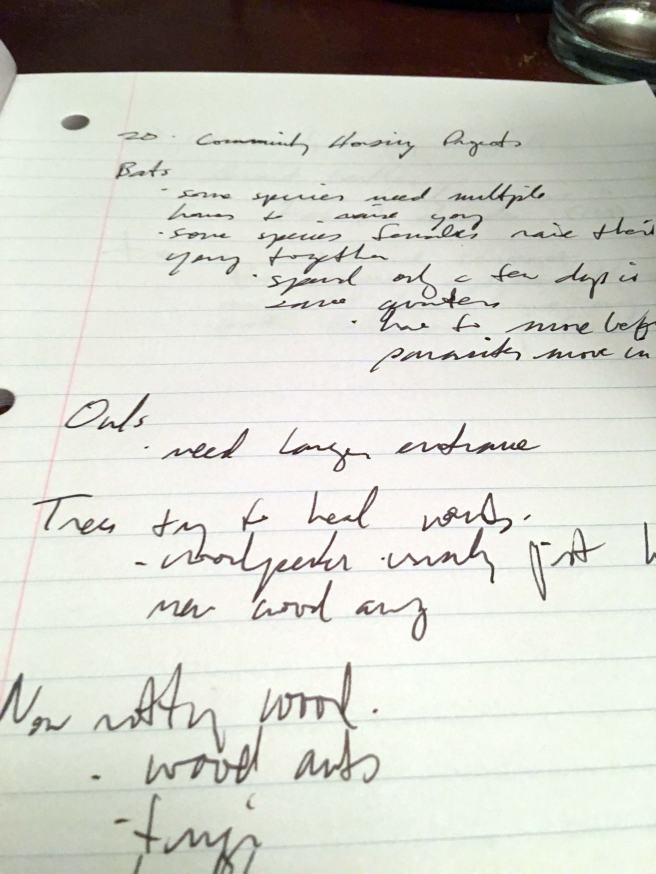
• bats
• some species need multiple homes to raise young (128)
• some species the females raise their young together
• spend only a few days in some quarters
• have to move before parasites move in
• owls
• need larger entrance
•trees try to heal wounds
• woodpeckers just hammer new wood away
•now rotting wood
• wood ants (129)
• fungi
• beetles
• animal excrement
• feeds bloodnecked click beetle
• hermit beetles
• can live in a tree for decades
• tree as community servant
• the more species diversity the less chance one will take over
 Peter Wohlleben’s The Hidden Life of Trees
Page numbers in parentheses. Italics are my own questions of the text.
Chapter 14 Notes Chapter 15 Notes Chapter 16 Notes
Chapter 13 Notes Chapter 12 Notes Chapter 11 Notes
Chapter 10 Notes Chapter 9 Notes Chapter 8 Notes
Chapter 7 Notes Chapter 6 Notes Chapter 5 Notes
Chapters 3 & 4 Notes Chapter 2 Notes Foreword, Introductions, and Chapter 1 Notes
land higher than water (105)
•should dry out but
• clouds form over oceans
• blow in from wind
• if this was the only system it would be dry 400 miles inland
thank goodness for trees and forests (106)
• rainfall intercepted in canopy
• evaporates immediately
• use up to 8500 cubic yds of water per mile
• water vapor creates more clouds
• clouds can travel farther inland
FOR WATER TO MAKE IT INLAND WE MUST HAVE FOREST
• coastal forests are the foundation of this system
• whole process breaks down if coastal forests cleared
• AMAZON FOREST DRYING OUT (107)
conifers
• release terpenes
• defense against illness and pests
• moisture condenses on molecules
• creates clouds twice as thick as over non forested areas
regular rainfall vital
• streams, ponds, and forests require STABILITY
trees slow rainfall (108)
• water drips gently from branches and leaves
• loosely packed soil absorbs water
• water droplets don’t join to form streams that rush away soil
• moisture takes decades to be released
streams
• more susceptible to temperature variations than springs (109)
• winter
• trees help prevent freezing
• bare branches allow warmth through
• also prevented by water moving over uneven bottom
• spring and summer
• new leaves shade stream from heat
• fall
• cool air and leaves fall and allow warmth in
• coniferous tree streams
• more susceptible to freezing (109)
• dead trees falling across streambeds (110)
• provide calm water
• slows water to give bacteria more time to break down leaves and debris
• foam
• humic acids
• beneficial how?
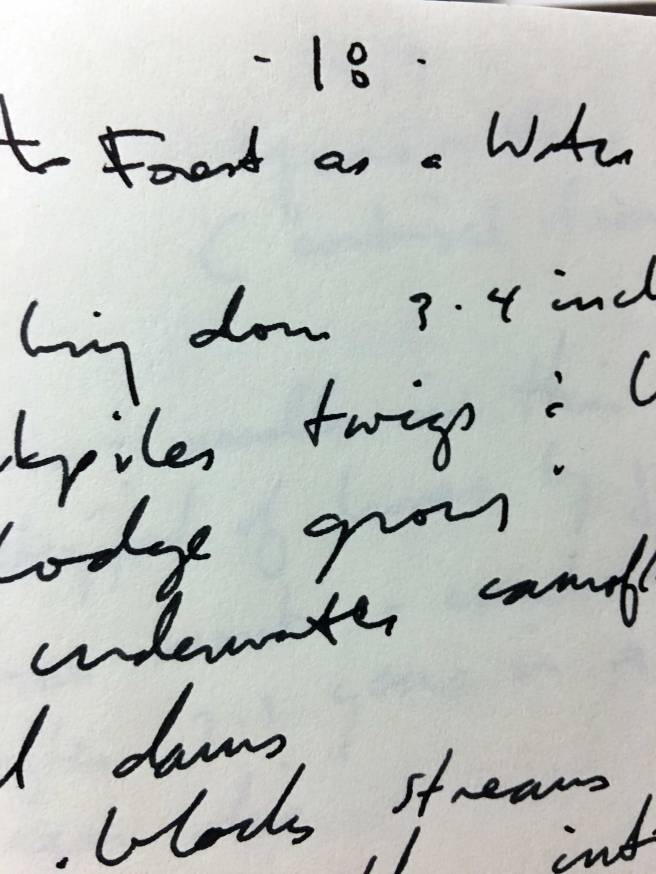
beaver
• can bring down 3 – 4 inch trees in one night (111)
• stockpile twigs and branches
• lodge gets larger
• underwater camouflaged entrances
• build dams
• blocks streams
• turns them into large ponds
• alders and willows grow
• beeches die
• regulates water supplies
deciduous trees
• chaffinch
• rustred bird with gray head
• chip chip chip chooee chooee if sunny
• if rain on way: run run run run run
Peter Wohlleben’s The Hidden Life of Trees
Page numbers in parentheses. Italics are my own questions of the text.
Chapter 14 Notes Chapter 15 Notes Chapter 16 Notes
Chapter 13 Notes Chapter 12 Notes Chapter 11 Notes
Chapter 10 Notes Chapter 9 Notes Chapter 8 Notes
Chapter 7 Notes Chapter 6 Notes Chapter 5 Notes
Chapters 3 & 4 Notes Chapter 2 Notes Foreword, Introductions, and Chapter 1 Notes
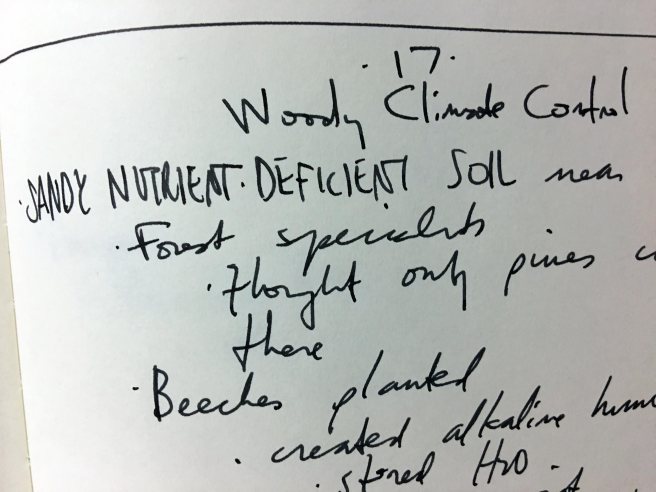
Bamburg Germany (99)
• sandy, nutrient deficient soil
• forest specialists thought only pines could flourish there
• beeches planted
• created alkaline humus
• stored water
• air becomes moist
• trees slow the wind
• grows above the pines
• FOREST CREATED ITS OWN IDEAL HABITAT! (100)
temperature differences between thinned conifers and naturally aged beech
• deciduous 50º < than coniferous
• due to biomass and shade
• more living and dead wood in the forest
• thicker layer of humus
• more water stored in total forest mass
• evaporation leads to cooling which in turn leads to evaporation
• intact forests sweat to cool (101)
• can see this in trees planted too close to houses
• tree sweats so profusely that algae and moss colonize the house
downpours
• deciduous trees open leaves of crown
• water runs down trunk
• foams up
• stored in soil
Peter Wohlleben’s The Hidden Life of Trees
Page numbers in parentheses. Italics are my own questions of the text.
Chapter 14 Notes Chapter 15 Notes
Chapter 13 Notes Chapter 12 Notes Chapter 11 Notes
Chapter 10 Notes Chapter 9 Notes Chapter 8 Notes
Chapter 7 Notes Chapter 6 Notes Chapter 5 Notes
Chapters 3 & 4 Notes Chapter 2 Notes Foreword, Introductions, and Chapter 1 Notes
forest systems are complicated (93)
• co2 = humus (94)
• becomes more concentrated over time
• far distant future:
• can become coal
• bituminous
• anthracite
today’s fossil fuels (94)
• trees that died 300 million years ago
• trees looked different then
• 100 ft tall horsetail or fern
• trunk diameters of 6 ft
• most trees grew in swamps
• died of old age
• splashed down in stagnant water
• hardly rotted at all
• over thousands of years became layers of peat
• rocky layer
• pressure turned peat into coal
today no coal is formed
• forests are constantly cleared
• sun reaches down
• kicks trees into high gear (95)
• consumes humus deep down into soil
• carbon stores in our latitudes being consumed as fast as its being formed
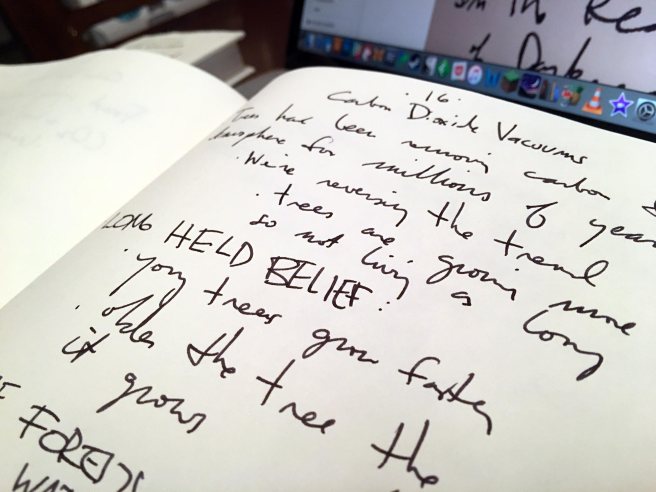
trees have been removing carbon from atmosphere for millions of years (96)
• we’re reversing the trend
• trees are growing more quickly so not living as long
shatters long-held belief that young trees grow faster
• older the tree the more quickly it grows (97) !
IN ORDER TO USE FORESTS IN FIGHT AGAINST GLOBAL WARMING
• we must allow them to grow old (98)
Peter Wohlleben’s The Hidden Life of Trees
Page numbers in parentheses. Italics are my own questions of the text.
Chapter 13 Notes Chapter 12 Notes Chapter 11 Notes
Chapter 10 Notes Chapter 9 Notes Chapter 8 Notes
Chapter 7 Notes Chapter 6 Notes Chapter 5 Notes
Chapters 3 & 4 Notes Chapter 2 Notes Foreword, Introductions, and Chapter 1 Notes
half of the biomass of forest is in the soil (85)
• most life can not be seen by naked eye
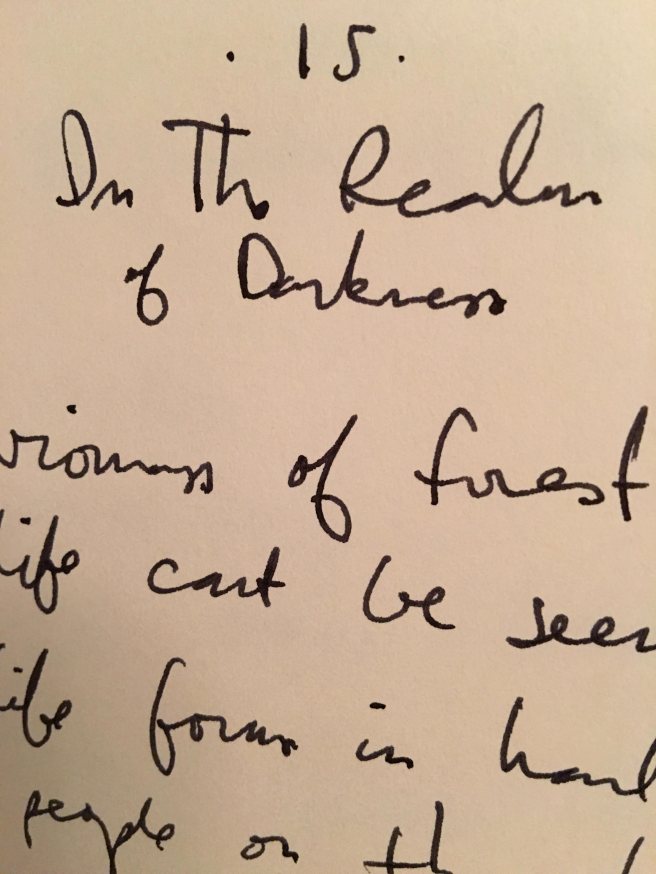
• more life forms in a handful of forest soil than people on the planet (86) is that true?
• teaspoonful contains miles of fungal filaments
when soil first created:
extraordinary to consider that soil is something that is formed over time – not something that just exists. i’m even more dismissive of it when I think of it as simply ‘dirt’. dirt feels dead – but soil feels alive and thriving
• geological processes in ice age
• sub zero temps
• glaciers ground down fragments
• created loosely packed substrate
• bacteria fungi and plants died to form humus
• trees moved in thousands of years later
• stabilized soil with root systems
• humus grows deeper
• early stages of bituminous coal
erosion
• forests left undisturbed
• lose only 1 to 14 tons of soil per square mile annually (87)
• soil becomes deeper and richer
• growing conditions constantly improve
animals
• beetle mites, springtails, pseudocentipedes
• first link in food chain
• terrestrial plankton
• countless species waiting to be discovered
beetles (88)
• oribatid mites
• live off leaves and bark fragments, and fungi
weevils
• ‘tiny elephants’
• most species-rich family of insects in the world (89)
• eat small holes in leaves
• plant eggs
• larvae eat their way out
• some species can no longer fly
• can only travel 30 ft per year at best
• only there if undisturbed forest
• forests cleared in middle ages won’t have them
• starve and die out in altered forests
will there ever be old growth forests again (90)
• bavarian forest (national park)
• microscopic organisms can cover long distances
• (by bird)
• if there are more undisturbed forests, they can make a comeback
Lüneberg Heath (91)
• planted oaks 100 years ago
• still gaps in microscopic species
• need preserves of ancient forests
• like Hümmel (92) with mixed use
• burial sites
• restore longleaf pines in southwest usa how so?
• ancient Caledonian Forests
 backyardbiome.org